
Designing a Backyard Patio for Year-Round Outdoor Living
July 23, 2026
Quick Answer: A backyard patio for year round living works when you plan for four things at once: shade, airflow, drainage, and materials that stand up to heat and humidity. In the North Houston and Montgomery area, that means orienting the space to block the harsh afternoon sun, keeping air moving so summer humidity feels tolerable, and grading the slab so heavy storms drain away from your foundation. Pair those basics with heat-friendly surfaces and a few comfort layers, and you get an outdoor room you reach for in July and in January. The sections below walk you through each decision in the order a good build follows.
You step onto your patio on a bright Saturday in late spring, coffee in hand, and within twenty minutes the sun has pushed you back indoors. By August the slab still radiates heat well past sunset, and the first real downpour leaves a shallow pool near the back door. A backyard patio built for year-round living solves all three of those problems at the design stage, long before the first load of base material goes down. The goal is a space that stays comfortable through Montgomery County's long, humid summers and its short, damp winters, so you use it in every season instead of a handful of mild weeks. Getting there is less about any single feature and more about how a few smart decisions stack together.
Start With How You Plan to Use the Space
Before you think about roofs or pavers, get clear on how the patio will earn its keep across the calendar. That picture drives every layout choice that follows.
Map your daily routine
Walk through a normal week. Morning coffee, weeknight dinners, weekend gatherings, and the occasional big cookout all ask different things of the space. A patio meant for quiet mornings can stay compact and tucked near the kitchen door, while one built for hosting needs room to move and clear sightlines.
Zone for different activities
Most patios that get used all year are really two or three spaces working together: a dining area, a lounge area, and often a cooking or fire feature. Sketching those zones early keeps the finished space from feeling like one flat slab with furniture dropped on top.
Think in seasons, not months
A design that only shines in spring and fall leaves most of the year on the table. Plan for the peak of summer heat and the damp chill of a Gulf Coast January at the same time, and you avoid
building a patio you abandon half the year.
Design Shade Before Anything Else
In this part of Texas, shade decides whether you use a patio or avoid it. Everything else is secondary. Long stretches of temperatures in the mid-nineties and above make an uncovered slab hard to sit on from late spring into fall, and most homeowners plan shade last when it really belongs first.
Read the sun's path
The afternoon sun swinging in from the west is what drives you indoors. Note where it lands on your yard between roughly two and seven in the evening during summer, because that is the window you most want to protect. A cover that blocks the low western sun does far more for daily comfort than one aimed only at midday overhead light.
Choose a cover that fits your yard
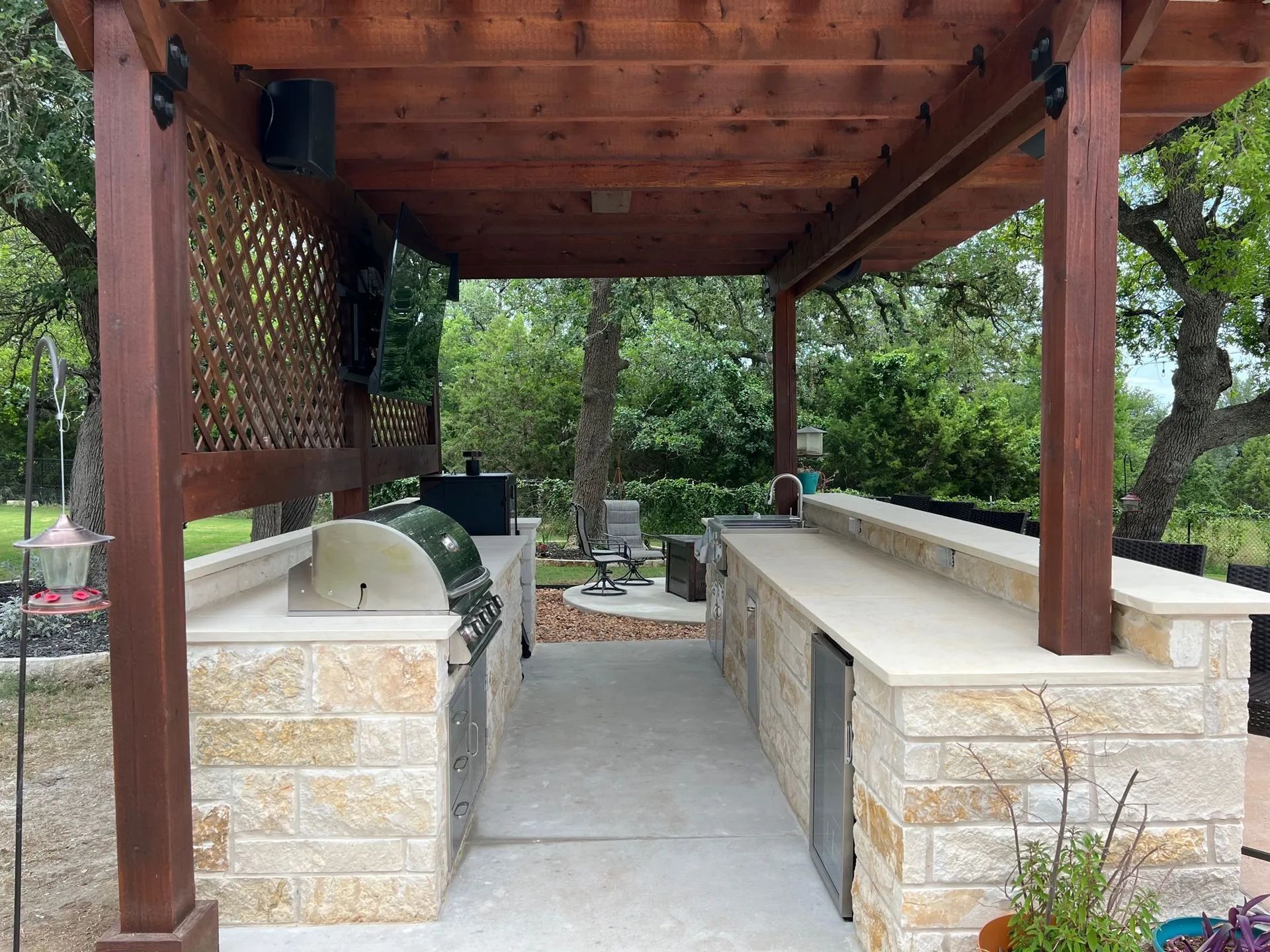
A pergola with fixed slats gives dappled shade and steady airflow, a louvered pergola lets you open or close the roof as the sun moves, and a solid-roof pavilion delivers full shade plus rain protection so you can sit outside during a passing storm. Each has a place. The right pick depends on how much sun your yard takes and whether you want to stay dry in wet weather.
Layer in adjustable shade
Fixed structures do the heavy lifting, but shade sails, roll-down screens, and canopy panels let you fine-tune coverage as the sun shifts through the seasons. Adjustable pieces also keep an open pergola comfortable on the hottest afternoons without walling the space in.
Tip: Orient a pergola or pavilion so its longest solid edge faces west. That single move cuts the worst of the late-day glare and heat, and it usually matters more than the total square footage of the cover.
Grade and Drain for Clay Soil and Heavy Rain
The ground under a North Houston backyard is mostly expansive clay, which swells when wet and shrinks when dry. That constant movement, paired with the region's heavy downpours, is hard on any surface that is not planned for it. Drainage is where a year-round patio is won or lost.
And it is the part most people never see. The base and the slope do their work underground, quietly, which is exactly why they get shortchanged.
Slope away from the house
A patio should carry a gentle, deliberate fall away from your foundation so rain sheds toward the yard rather than back toward the slab and the home. A surface that looks flat to the eye still needs a measured pitch built in during construction.
Build a base that tolerates movement
A deep, well-compacted gravel base gives the surface above it room to ride out clay's seasonal shifting. Interlocking pavers set over that kind of base flex slightly with ground movement and can be lifted and reset if a spot ever settles, while a poured slab depends on proper reinforcement and control joints to manage cracking.
Plan where the water goes
On yards that hold water, channel drains along the patio edge, a French drain below grade, or permeable joints between pavers give storm runoff a clear path off the surface. Deciding this before the pour or the base work is far easier than chasing a drainage problem after the fact.
Warning: Skipping the grading and base work to save time is the mistake that shows up first. A patio poured flat on unprepared clay tends to trap water, shift at the edges, and crack within a few wet-and-dry cycles, and correcting it later usually means rebuilding rather than patching.
Pick Surfaces That Handle Heat and Humidity
Material choice affects how the patio feels underfoot, how it holds up to storms and soil, and how much upkeep it asks of you over the years.
Favor lighter colors
Dark surfaces soak up the sun and stay hot long after midday. Step onto a dark slab barefoot at four in the afternoon and you learn this fast. Lighter buff and beige tones reflect more sunlight and stay cooler to walk on, so in a climate with this much direct sun, surface color is a comfort decision as much as a style one.
Weigh pavers against poured concrete
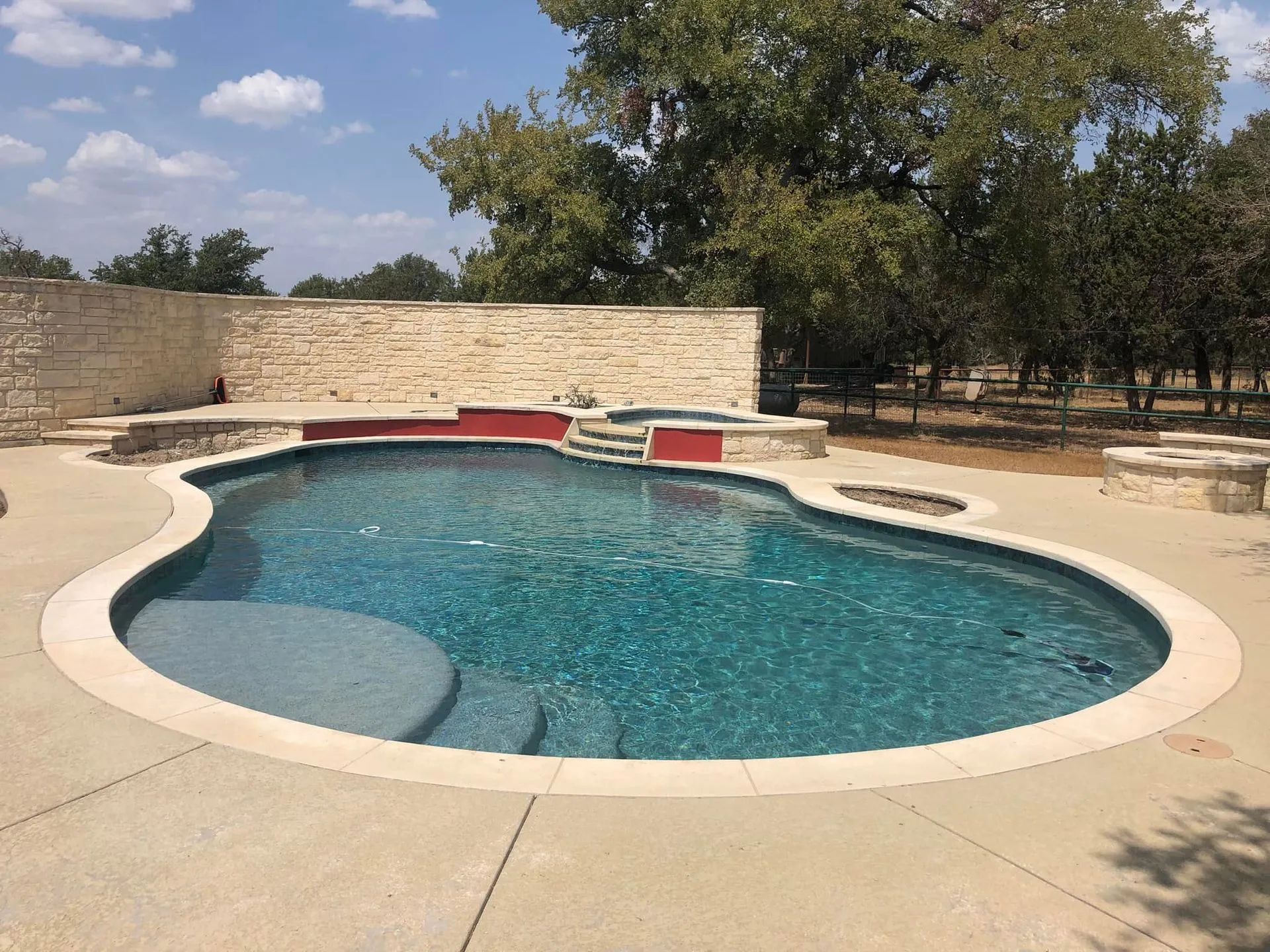
Poured concrete gives a clean, continuous surface and takes stamps, textures, and stains well. Pavers cost more up front in labor and material but flex with clay movement, resist cracking, and let you lift and replace a single unit instead of a whole section. Natural stone options such as travertine stay cool underfoot and hold their footing when wet, which suits patios that sit near a pool.
Mind slip resistance and mildew
Our humidity encourages mildew on smooth, shaded surfaces, so a textured finish and periodic sealing help keep a patio safe and clean. Sealed joints on a paver patio also discourage weeds and ants from working their way up between the units.
Extend the Seasons With Comfort Layers
Once the structure, airflow, drainage, and surface are right, a few added features stretch the patio into the shoulder and off seasons so it stays in use nearly year-round.
Warm it for cooler months
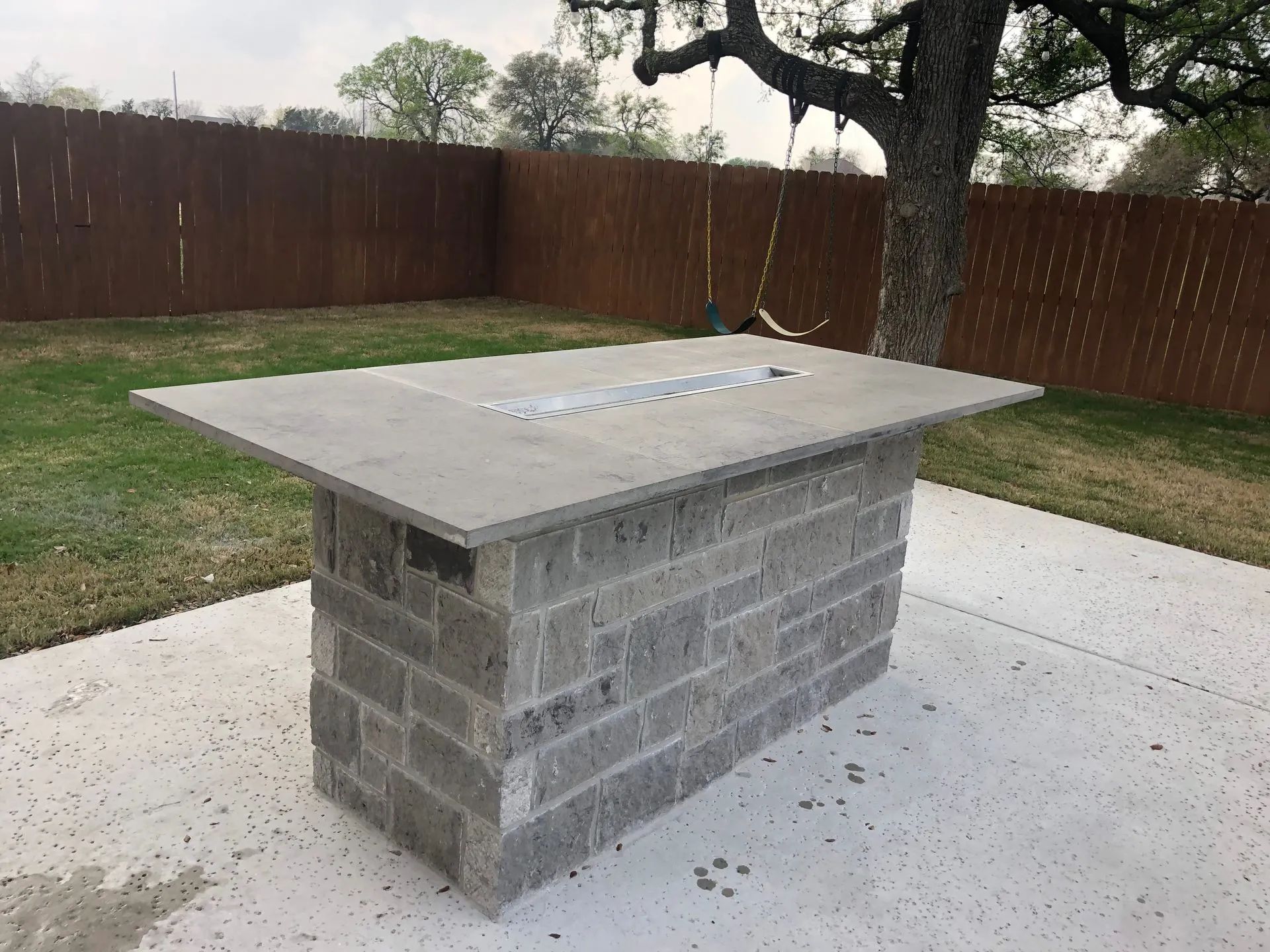
A built-in fireplace, a fire pit, or overhead radiant heaters take the edge off the damp Gulf Coast winters and give the space a natural gathering point on chilly evenings. Even a modest heat source turns a handful of usable winter nights into many.
Cool it for the peak of summer
Beyond shade and fans, a misting system can drop the felt temperature on the worst afternoons, and it pairs well with an open pergola where the mist can drift and evaporate freely.
Light it for evening use
Layered lighting along steps, under seating walls, and overhead in a pergola lets the patio carry into the night, which is often the most comfortable time to be outside in summer.
Screen out pests
Retractable or fixed screening keeps mosquitoes and other insects off a covered patio during the muggy months, so the space stays inviting after dusk when bugs are at their worst.
Frequently Asked Questions
What makes a patio usable year round in the North Houston area?
Four things working together: shade blocking harsh afternoon sun, airflow moving humid air, drainage shedding heavy rain from your home, and surfaces suited to hot summers and damp winters. Miss one and the space sits unused.
Which direction should my patio face for the most comfort?
Shield the space from the western afternoon sun while opening it to the southeast breeze off the Gulf. A cover with its solid edge westward and open sides toward the wind balances shade and airflow best.
Is a pergola or a solid roof better for a year round patio?
It depends on your use. A louvered pergola gives adjustable shade and airflow, while a solid-roof pavilion delivers full shade and rain protection. Storm-sitters lean toward solid roofs; those prizing open air and light choose pergolas.
What patio material stays coolest in Texas heat?
Lighter surfaces reflect more sun and stay cooler underfoot than dark ones. Natural stone like travertine stays comfortable barefoot and grips well when wet, a common poolside pick. Light-toned concrete pavers are another strong heat-comfort option.
How do I keep my patio from flooding during heavy storms?
Start with a deliberate slope carrying water from the house, set over a deep compacted base. On wet yards, add channel drains, a below-grade drain line, or permeable paver joints. These choices belong in the plan beforehand.
Can I add year round features to an existing patio?
Often yes. Many patios accept a new pergola or cover, added fans, heaters, screening, or improved edge drainage without a full rebuild, provided the base and grading are sound. A site review confirms what upgrades work.
Building a Backyard You Reach for All Year
A patio that stays comfortable in every season starts with a plan that respects the sun, the breeze, the clay soil, and the storms this region hands out. Picture a covered outdoor room with steady airflow, a surface that stays cool underfoot, water that drains where it should, and a fireplace that pulls everyone outside on a cool night. Customs Patios and Pools designs and builds exactly that for homeowners in Montgomery, Texas, handling the shade structure, drainage, grading, and heat-ready surfaces so the finished space performs the way you imagined it. With 8+ years of custom craftsmanship across pools, patios, outdoor kitchens, decks, decorative concrete, and masonry, the team builds outdoor rooms meant to be used, not admired from the window. Book a design consultation to start mapping your year-round backyard.